The moment after I signed with my first literary agent, I immediately went to my website to add those coveted words: “Rep’d by…”. After four years of querying agents for a memoir, I felt I had finally made it into an elite author club. I never imagined that one day I would face gatekeeping in the American literary world because I’m Jewish or because I believe that Israel has a right to exist.
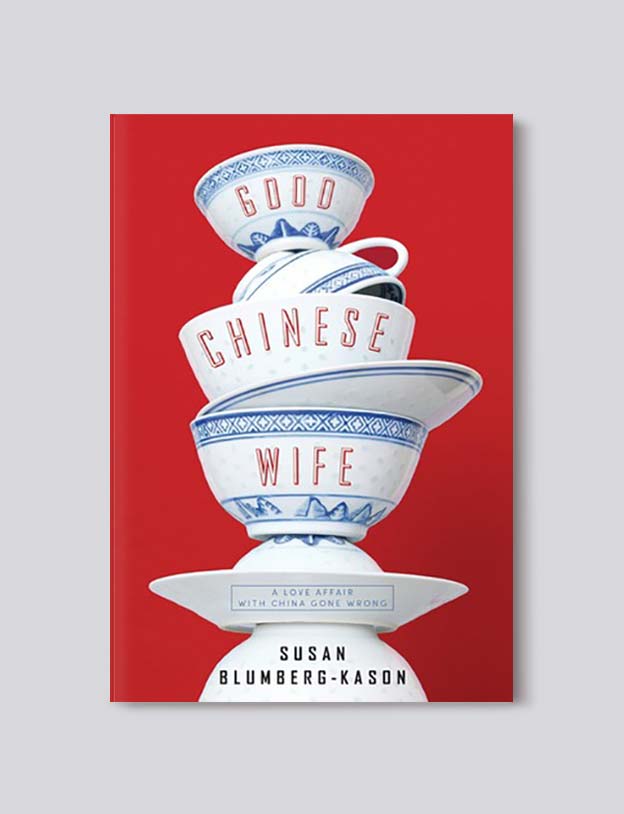
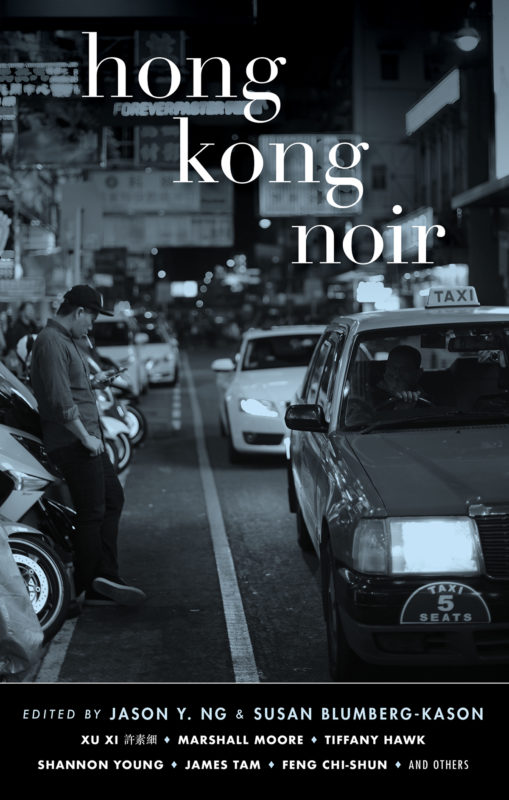
My agent patiently spent the following six months working with me on revisions. After three rounds of submission, we got an offer for my memoir, Good Chinese Wife. Some years later, I had an idea for a Hong Kong anthology in Akashic Books’ renowned Noir Series. My agent was game and soon we had another book deal. I could hardly believe I joined celebrated authors like Joyce Carol Oates and Tayari Jones, editors of other volumes in this series.
When Hong Kong Noir came out in 2018, I told my agent about an idea for my next book: a biography of Bernardine Szold Fritz, a Jewish woman who moved to Shanghai in 1929 and started a literary salon there, bringing together Chinese and foreigners around the arts. It was a feel-good story at a time when we needed more togetherness. Most of all, I felt Bernardine was someone I could write about because I’m Jewish, from the same state in the US, and I’ve spent a lot of time in Shanghai. I completed a draft a year into the pandemic, excited for my agent to read it.
To my surprise, instead of giving me feedback on how I could improve the narrative or character development, my agent said she no longer felt this story should focus on Shanghai and that I should instead center the book on the other cities I include in the backstory: Chicago, New York and Paris. Her concern was that Bernardine might appear as a ‘white savior’. I felt confused. How could Jews even be deemed white, particularly in 1930s when they were impure to the Aryan (ie, white) race? And these days again, as one of the most vilified minorities, we are exempt from white privilege, even if many of us are white-passing. It’s exhausting to try to explain this, so I just argued that Shanghai was a cosmopolitan city when Bernardine’s salon took off. She wasn’t ’saving’ anyone. If anything, she was absorbing the many different perspectives of the people who attended her salons. But my agent remained unconvinced.
At the time, I felt I had no choice. She represented me, so I had to do what she asked. We received all rejections for this book proposal that centered on Bernardine’s time in Chicago, Paris, and New York.
My agent decided there was no point to try for more publishers and asked me to find something else to write about. I felt gutted, yet wanted to be amenable and spent a couple of days jotting down notes. Nothing, however, interested me more than Bernardine’s Shanghai story.
I decided to stand strong and asked my agent if she would re-submit my original proposal. I had read a handful of books about this time in Shanghai where Bernardine was a footnote and was well aware that there’s almost a cult following of readers who enjoy 1930s Shanghai books, both Chinese and non-Chinese history buffs. But my agent was no longer interested in representing me as a writer of books set in China, even though my memoir was set in Hong Kong and China, and my anthology in Hong Kong. This was in 2021 and the feeling in US publishing was that authors should write about people like themselves, less we commit cultural appropriation.
My agent was the one who suggested parting ways.
While it took me four years to find my first agent, it took four hours to find my second. My new agent said she’d been looking for another China book because she was interested in the topic. She was Jewish herself and loved Bernardine’s story. We had a book deal two months later, with a Jewish editor who fell in love with Bernardine, too, and remarked that she didn’t know there were Jews in China.
As this book was getting ready for publication, I pitched my agent another biography idea. I had recently learned that Golda Meir had grown up in Milwaukee, just 90 minutes north from my hometown. I wondered why I hadn’t known this part of her story until a few years ago. Surely others would be interested too?
Minutes after I emailed my Golda idea, my agent wrote back with a resounding yes. As a proud Jewish woman, she even suggested I focus on how Golda developed her belief in the Jewish right for self-determination in the United States. I loved that idea because it would set my book apart from other biographies of Golda that centered around her political career in Israel. I wanted to show how she got there.
I made plans to visit Golda’s school in Milwaukee, and quickly learned of the available archives and other firsthand written accounts. Over the next half year, I put together a proposal.
In late September 2023 my agent sent the proposal to about twenty editors. We had high hopes (my agent even thought we could get a five-figure advance). It was the first time I wasn’t anxious about going on submission.
Then October 7th happened.
On October 8th, my agent called to suggest I write a letter to send to all the editors who had my proposal. She wanted me to state why this biography of Golda was more important than ever. On social media, empathy for victims of the massacre the day before had changed overnight to protests against Israel while the Israelis were still trying to account for all the murdered and kidnapped people. We worked all day on finessing my letter and she sent it out to the editors that evening.
What ensued over the next few weeks, however, was rejections, even though some editors echoed our feelings about the importance and crucial timing of this book…
By mid-November, my agent emailed me out of the blue that her boss wanted her to pull Golda’s biography from the editors who were still reading it. I felt like the wind had been knocked out of me, but suggested we approach university presses, which have Jewish studies series. My agent simply replied it’s not a good time – there’s too much anti-Zionism in publishing now, refusing to discuss the matter any further.
So here this was happening again – a book idea that my agents had loved at first but were now giving up on without trying to see if they could sell it. I understand that not all proposals find a home, but how would we know if we didn’t try first?

My agent wanted me to think of another biography I could write that wouldn’t be so ‘controversial’. Bernardine had been an acquaintance of Gertrude Stein, so after some brainstorming, we came up with an idea of a book exploring how Gertrude Stein survived World War II as a Jewish American lesbian in occupied France. I was sad to leave Golda, but hoped I could bring her back after selling the Gertrude biography.
Before I could finish my proposal, however, my agent left her job and I was passed on to another agent. I wondered whether a fresh start might be just what I needed. Perhaps now I’d have a chance to bring back Golda. I explained my ordeal to my now third agent. Like her predecessor, she too, felt Gertrude’s biography would be more marketable for the time being.
My agent emailed me over the summer of 2025 to say that my Gertrude proposal was ready to go on submission, but after much thought she couldn’t champion my career. My stomach fell as I read her next sentence that informed me that this email was serving as a termination of my contract with the agency. Had she seen my recent social media posts? Did her agency think I was a liability because I posted in support of Israeli hostages? Was this the real reason they didn’t want to represent my Golda biography? I have no hard evidence for my suspicions, but have heard first-hand from three other Jewish writers that their agents recently terminated their contracts using the same phrase—“cannot champion your career”. And, of course, the current anti-Israel climate in the publishing industry also makes my guess feel plausible…
After a dozen years, I was un-agented. I went to my website and instead of changing the names after “Rep’d by…”, I took that whole line down.
I had never given up on my Golda Meir biography, if only in my thoughts as I was working on the Gertrude Stein proposal. I needed to give Golda a try. I couldn’t think of any other topic I cared so much about, and I also had never spoken with anyone who thought this American part of Golda’s life was a bad idea. If anything, they wanted to know more. So I returned to Golda, determined to see this book in print.
I looked for another agent over the summer of 2025, to no avail. So I took control and pitched Golda’s story to university presses on my own until my dream publisher—the University of Wisconsin Press—said yes. They have a Jewish Studies series and a regional Wisconsin series. Golda fits both. And my editor there had edited an Abba Eban biography at another press. I was over the moon when he said yes. As it stands today, I will turn in the completed manuscript by this July to start the peer review process.
I have to wonder if nowadays many publishing professionals are self-censoring because they think they will find opposition if they represent books by Jewish authors, especially the ones that deal with Israel? Not a few literati speak up against book bans and censorship, but if there’s gatekeeping before manuscripts and book proposals even get to editors, isn’t that a form of censorship by the same people who are supposed to foster critical thinking? The answer to this absurd situation, I think, is to continue writing. Jewish books are still being published, including the ones about Israel and October 7. In hindsight, how happy I am that I persevered with Golda.
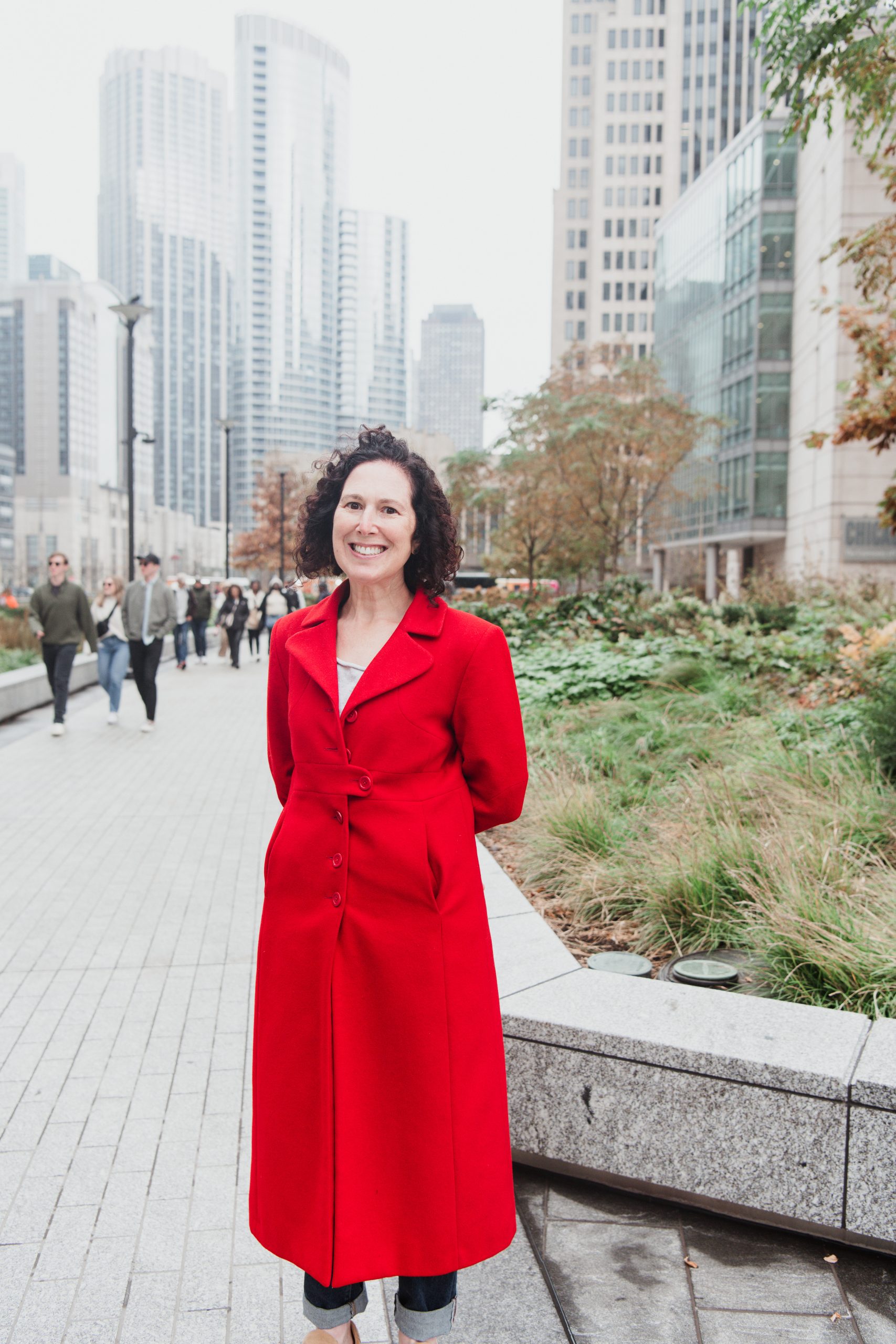
Susan Blumberg-Kason is the author of Bernardine’s Shanghai Salon: The Story of the Doyenne of Old China (Post Hill Press), a 2023 Zibby Awards finalist. She is also the author of Good Chinese Wife: A Love Affair with China Gone Wrong (Sourcebooks) and the 2024 Zibby Awards winner When Friends Come From Afar: The Remarkable Story of Bernie Wong and Chicago’s Chinese American Service League (University of Illinois Press). She is the co-editor of Hong Kong Noir (Akashic Books) and a regular contributor to the Asian Review of Books, Cha: An Asian Literary Review and World Literature Today.



Leave a Reply