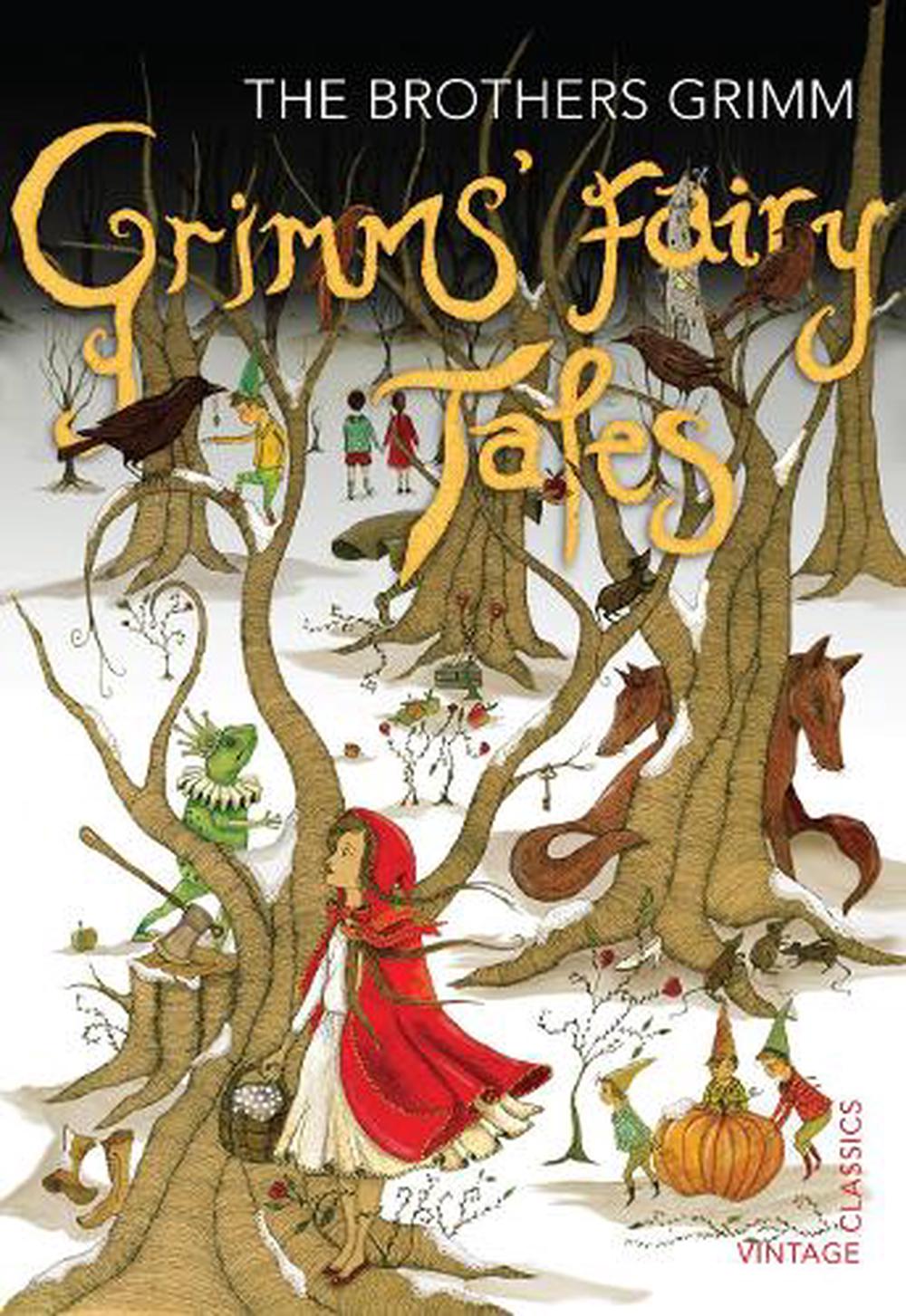
Once upon a time, there was a young girl who was bed-bound on account of her sickly heart, and so she spent much of her time daydreaming or consuming the abundant fairytales in her family’s vast library. There she found old folktales as well as their later retellings by individual authors, myths, fables, legends, and modern-day fairytales; and they came from every nook on the globe – Russia, Turkey, France, Indonesia, Scandinavia…
As you can see, the company I kept in my childhood was eclectic and questionable. I wiled my days away with lazy beauties who would sleep for 100 years, lascivious gods who turned themselves into swans and bulls to get the girl, shifty foxes, child-gobbling witches. I loved them all. The worse the better. I was a child on intimate terms with death because of my illness, and the darkness I found in fairytales made more sense to me than the cheerful cartoons my peers liked to watch. Even sad endings didn’t put me off. I got it, why the mermaid had to dissolve into the waves rather than get the prince. Why in the older versions of Red Riding Hood she never emerges back from the wolf’s belly. Life was like that. Some enjoyed playing outside with their friends, others stayed in bed and received daily injections.
But while in most fairytales the universe isn’t pretty and suffering abounds, the majority still end well. Protagonists get what they seek – family acceptance, romantic love, wealth, revenge, or at the very least survival. The beauty wakes up or escapes the tower. The chicken outsmarts the fox. And if your brothers are turned into birds, you can always sew magical shirts for them to make them human again.
The happy ending doesn’t so much lighten the darkness as make it attractive, delicious – much like Bachelard’s stormy weather when observed from the indoor comfort of our hearth. So by the time the story ends, even if happily, we hold fewer illusions about humankind’s or the world’s supposed benevolence. This was something I imbibed into my creative skin; by the time I became a writer I was quite immune to sentimentality and knew my subject. It was the darkness. And its various shades and nuances.
As a child, I got my happy-ish ending. Despite doctors’ morbid predictions, I survived open-heart surgery. Later, still in primary school, I also survived a freakish bus accident and subsequent operations. Eventually, my body repaired. But I never recovered from my fascination with fairytales. It was around the time when I was undergoing all those surgeries that I made my first forays into writing. Unsurprisingly, most of them were fairytales. But (also unsurprisingly) in my stories, these were the beauties who would slaughter the dragons, and bring their teeth, or eyes, or hearts, to the swooning princes as proof of their love. I was no beauty, but I was sick of my and the fairytale women’s passivity, and tried to wield my pen like a magical sword. This was how my other lifelong writing subject, feminism (and its shades and nuances), was born.
I am one of countless writers who find their inspiration in fairytales, particularly that the drama there is always heightened and so their structures hold great promise to us. For example, if you aspire to write a novel, and urgent themes and compelling characters are beating their wings under your skin, but you cannot for the life of you come up with a gripping plot, then why not turn to fairytales for help?
I am not suggesting theft, nor artless shortcuts, but a standard operational procedure for writers. There are millions of books in the world and, on close examination, their plots are all about the same things – struggles over love, sex, power, illness, death, money. Writers can make their unique mark by stamping the singularity of their and their characters’ worldviews onto the page. But to get readers’ attention and entertain them, we need a dramatic plot. We need high stakes in our stories. And where are the stakes higher than in fairytales? Unable to feed his children, a man leads them to their (assumed) death in a forest… A girl gives up her voice to appeal to the man she loves…
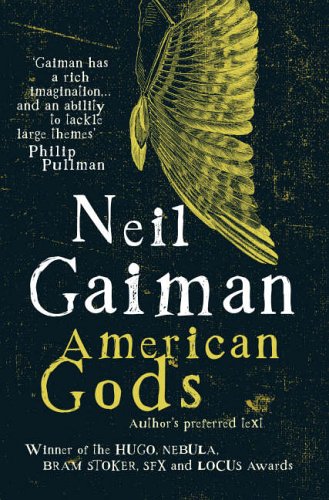
Many writers utilise such enthralling plots to illuminate whatever they have to say about human nature and social issues. Donald Barthelme depicted the spirit of New York in the 1960s in his novel, Snow White. Helen Oyeyemi employed the same tale to discuss racial politics in 1950s New England in Boy, Snow, Bird. In Deathless, Catherine M Valente used Russian folklore to explore Russia’s history in 20th century. And Neil Gaiman’s epic novel American Gods captures spiritual impoverishment of today’s America while drawing on a vast array of myths from around the world.
But we don’t have to retell fairytales to make use of them. They can enhance our narratives in subtler ways. As an adult, I no longer write fairytales, yet I can find their traces in most of my works. Most commonly, they are there in the allusions I make to those archetypal elements of fairytales that speak to me the most. These allusions help me to draw out the universal dimensions of my particular stories.
I especially relate to the archetype of transformation. Metamorphosis isn’t just magic, it is a worldview, a lens through which to see the world. It is an optimistic lens that postulates that genes and demographics aren’t destiny, that we can reinvent ourselves. A terrified nymph pursued by a divine rapist can turn into a strong, self-contained tree… Metamorphosis is also a recurring motif in the stories I tell about myself and others in Imperfect, a book where I explore how our physical appearance can shape our lives. I write about a woman who leaves her violent husband and, through extreme body modification, transforms herself into a powerful vampire. I write about myself – a timid, sickly child with scars from her surgeries who turns into an outgoing young woman who makes her stamp on Tel Aviv’s nightclub scene and into a published writer whose protagonists, in turn, would never cry victim, would always try to take their destiny by its fatalistic horns…
Such way of writing might sound analytical, but I actually write rather instinctually. First fairytales appear on my pages and only later their relationships to my stories become apparent. For example, while drafting The Dangerous Bride, my memoir about non-monogamy, I spontaneously began referencing Bluebeard and One Thousand and One Nights.
J’s house was a bargain he’d bought in order to resell. The place felt like an underground train station with its bare walls and echoing emptiness occasionally disrupted by old, hard furniture. The narrow corridor, punctuated by numerous doors, reminded me of Bluebeard’s castle. At least there are no dead wives here, I thought hopefully.
But, of course, there was a dead wife… That dead wife was as central to my story as it was to the story of Bluebeard’s heroine.
Like Scheherazade I’d often seduced men with my words…
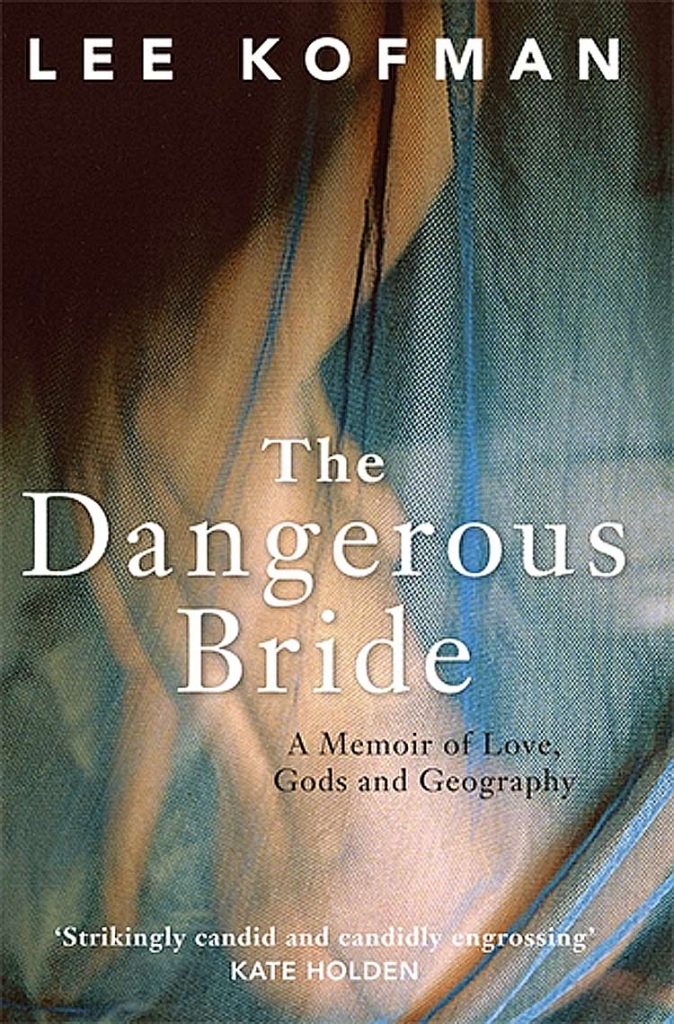
And like Scheherazade, and like Bluebeard’s young wife (I figured this out only after I finished the first draft) I, too, once shared that same dark impulse that was the engine of our stories – a young woman’s (initially) willing entanglement with powerful bad boys… In this way, the two supposedly very different tales – composed across different centuries and continents; one is book-long, another a short folktale; one is full of magic, the other a plausible account of a serial killer – reflect each other as well as become a mirror to my own story, and no doubt to the stories of many other women.
There is a mystery, an excitement, in testing our narratives, real or imaginary – with all their aches, ecstasies, dangers – against those which have been sung across the centuries and to find the universality embedded in our seemingly unique stories. To do this is to extend a warm hand across the pages to our readers. Or maybe to offer them a mischievous wink of complicity… Once upon a time, there must have been many young girls, and boys, who broke the dark magic spell of their sickbeds and travelled across oceans and decades to have many adventures – in the tangible world and on the pages of their own creations



Great post, Lee. So many writers are drawn to fairytales for great reasons.
Thank you, Meg! Sounds like you can relate to my obsession 🙂
Thankyou
my pleasure!
I’m into the Scandinavian myths and stories right now Lee! Thank you for this terrific and generous post…
BIg thank you, Kris! I’d so love to talk Scandinavian myths with you one day – they used to be among my favorites when I was a child xx
Another magical portal through which to see the work/words/narrative I read and am trying to write. Thanks Lee, for opening my eyes, yet again.
Thank you, dear Jenny, and my apologies for missing your initial comment, my notifications were down!
A happy obsession, I would say. Good post.
thank you so much! Sorry, Margaret, I missed your comment at the time you posted it. x
Loved this Lee. I can relate to it on so many levels. Thanks
Anni
I’m so glad to hear, Anni, big thank you!