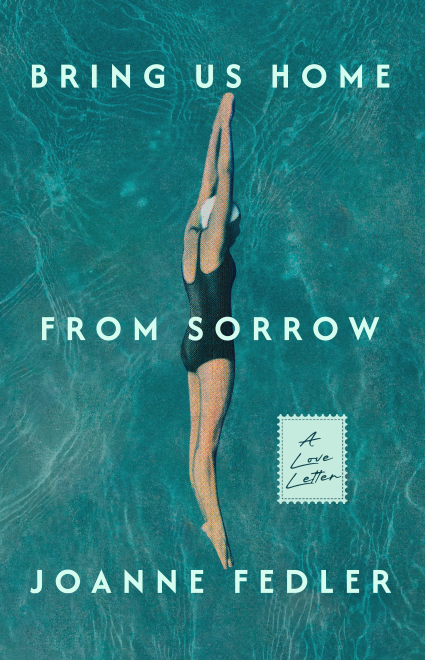
You would think that at this ancient stage of my writing career, working on a rewrite of a book would get easier. Bring Us Home from Sorrow is my seventeenth book, a memoir about losing my mother to ovarian cancer. But truthfully, the rewrite was just as tough as the first time I tackled one.
This book took five years to write. It began with 500 pages of letters I wrote to my mother during her illness and for a year after she died. These contemporaneous notes helped me remember the factual and emotional details, but they only provided the bare bones of the narrative. When I wrote those letters, I was inside grief. To create the first draft, I had to distil, integrate, and entirely rewrite the ‘story’ and craft a narrative that could extend beyond my personal experience into the universal.
Big topics like grief are made up of many personal moments. As writers, our task is to build a bridge so that the deeply personal can cross over into the universal experience.
How do we do this?
First, we must have sufficient distance from the experience to be able to hold it outside of ourselves. It’s almost like catching a glance of ourselves in a mirror, and not quite recognizing the face. While we can write through pain – often writing is a catharsis – experiences need to be processed internally before we can work with them narratively. Writing for an audience is a graduation beyond emotional processing. Cathartic writing and creative writing serve different purposes and ask different things of us. When we process emotion, we are doing it for ourselves, often chaotically. But writing for a reader is a discipline. It is an experience we curate for others. Our guiding inquiry should always be, ‘How is this landing for a reader?’
Secondly, we must discern which images ‘work’ and which are too abstract or irrelevant – even if they seem emotionally important to us.
In my case, only some of my images worked: a diary I bought for my mother the day before she died, with a year of blank pages for her to fill; my mother, nauseous from chemo, standing at the stove teaching me how to make her grapefruit jam; my father looking at my mother’s face one last time as her body was taken away.
My editor pointed out that these images were poignant because of their simplicity. She reminded me in her editorial report that ‘writing grief well, like writing any vast, universal phenomenon… asks us to parse and filter, to carefully curate what will serve the narrative so that the reader does not have to sift and labour.’
I had to trust that the few images I ended up choosing spoke for themselves. It meant leaving certain moments out, ‘even though they happened, even though they were true.’
On redrafting I also realised that sometimes I had too many metaphors for what I wished to describe. I needed more discipline with my language to keep my ideas clear and the moments vivid. For example, when I wrote about the cancer cells in my mother’s body, I’d resorted to a range of metaphors, I suppose because I was trying to understand the cancer: they seemed like ‘hungry ghosts,’ that Buddhist notion of doomed souls that wander forever unsatisfied because they just kept colonising more and more of my mother’s body. Later, I described the cancer as a ‘parasite gnawing away at its host,’ and then like a Pacman, swallowing up bits of my mother. But I felt them as murderous too, so I wrote, they were ‘hungry ghosts of the assassinating kind.’ Assassins, however, are completely unlike hungry ghosts. I had to choose. I got rid of ‘assassinating,’ to keep the metaphor of endlessly ravenous cells clean.
When we are unclear about what we’re saying, we tend to accumulate images, piling them one on top of the other. But such writing clouds the prose and overwhelms the reader. In the rewrite, time and time again, I selected the most powerful central image and allowed it to have its territory. Sometimes we think, ‘but these two or three ideas are so clever, how can I choose?’ That, of course is the discipline that a rewrite requires.
An editor I work with says that ‘a good metaphor is undeniable; it lands in the reader’s body without contest. It starts with emotional clarity. To achieve that, of course, is an exhausting business. It is much easier to throw as many images and metaphors at emotionally dense topics as possible, hoping something sticks. But that is a terrible muddled burden to pass on to a reader.
I had to take the jumble of images and metaphors and lay them out as if I were choosing a colour scheme for a room. Okay, I like purples, blues and greens, but I have to pick the one I love most, because there can only be one. To choose, I have to feel into which is the most emotionally honest. I don’t mean some are dishonest, but some obfuscate rather than clarify. We want as few obstacles for the reader to have to navigate as possible and to give them the most immediate access to the emotion we are trying to convey.
So one of my earlier passages read like this:
But over those eight months, I’d lie awake at night, sleep as distant as someone else’s love story, with my hands over my belly, imagining the cancer in my mother’s ovaries, those little nuggets of mystical mitochondria, the genetic pond from which I sprang. I tried to picture them – the two pink jellyfish in the basin of her belly, which once jostled with miniscule eggs, one of which was half of going-to-be-me, flourishing with mitosis to double and redouble life. But when it comes to cancer, ‘growth’ is not on the side of enlivenment. Those nests of once-nascent possibility, abandoned shells, tiny haunted pods, had been overrun by malignant cells by stealth, mutating and chomping away like parasites – and for how long? Where had the cancer cells come from as they blossomed and colonized, insatiable in appetite, hungry ghosts of the assassinating kind? The malignancy was gnawing away at its host, the very vestibule that gave it life, swallowing my mother like a Pacman.
On rewrite, the passage became this:
Over the months of her treatment, I would often lie awake through the night, with my hands over my belly, imagining the cancer in her ovaries. I tried to picture them—two pink jellyfish in the basin of her belly, which once jostled with miniscule eggs, one of which was half of going to-be-me. Those little nuggets of genetic possibility were now haunted pods overrun by mutating malignant cells. What had once given life was now blossoming death.
At the end of revision, a draft of 82 000 words became a book of 61 000, its prose cleansed and sharpened.
It’s a challenge to forfeit writing passages or life’s moments we are attached to. We will feel all our resistances coming up. But as we let go, reimagine and reshape our first draft, we create more spaciousness for a reader to enter the text. In this way, our deletions become openings for others; our clarity, a doorway that invites a reader in.
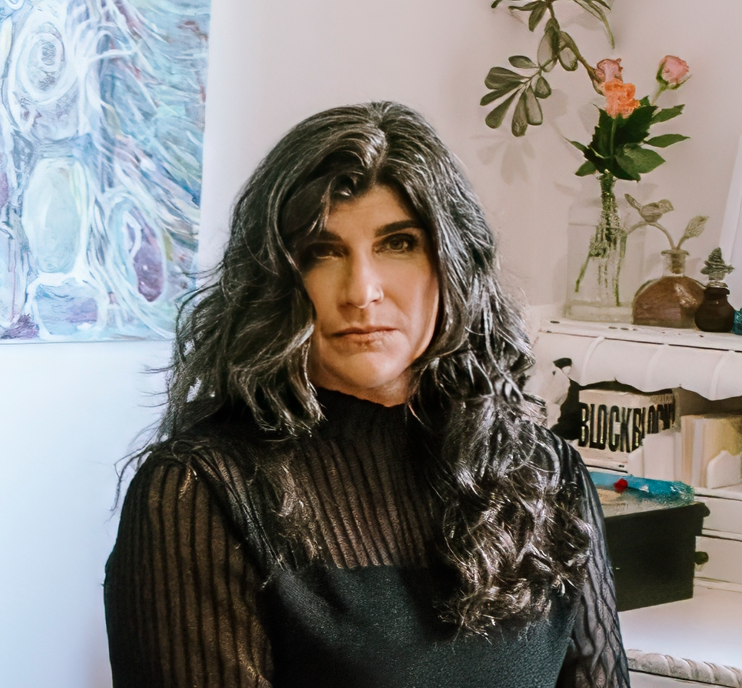
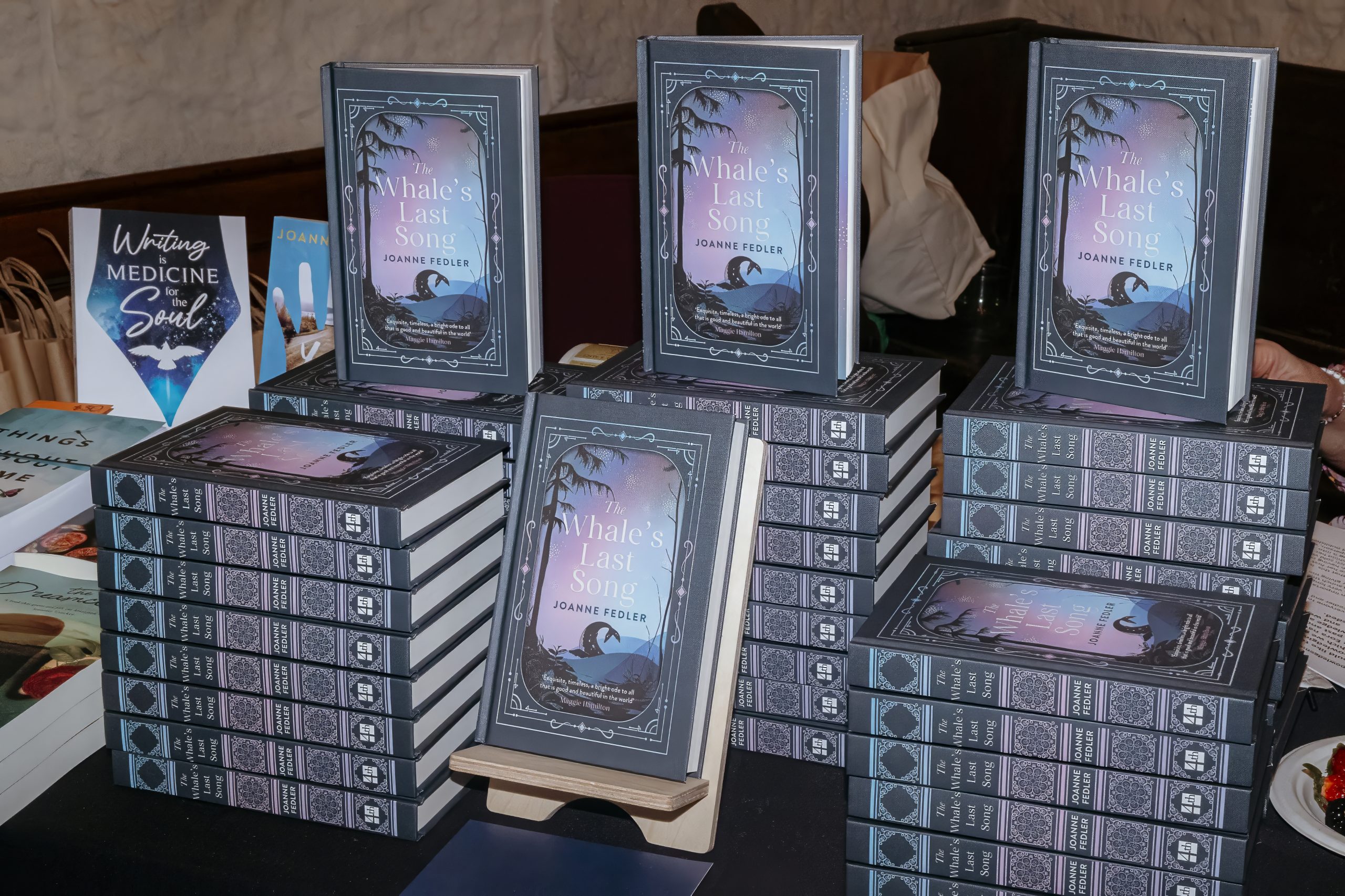
Joanne Fedler is the internationally bestselling author of 17 books, which have sold over 750 000 copies worldwide. She has an LLM from Yale and was a woman’s rights advocate. Her novel Things Without a Name has been optioned for the screen by Bunya Productions. She is a writing mentor and facilitator, and runs online courses and writing retreats. In 2026 her retreats are in Portugal (on midlife memoir) and Hydra (based on the lyrics of Leonard Cohen). In 2027, her retreats will be in Queenstown NZ and Bali. www.joannefedler.com



Joanne, thanks for your openness about the redrafting process. It’s reassuring to know that writers of your experience have the same difficulties as I do. I found the discussion of metaphors very helpful.
I’m so sorry for your loss.
Thank you, Joanne, for what is a very brave and resonant insight to the writing and revision process, and the importance and elegance of restraint. I have learned so much, particularly the line: ‘Writing for an audience is a graduation beyond emotional processing’. It is such a poetic and honourable act to dedicate a book to a loved one. Thank you for sharing your ‘story behind the story’ and passing on this writing wisdom.
Bianca, I’m so glad Joanne’s post spoke to you! She’s a wonderful writing teacher.