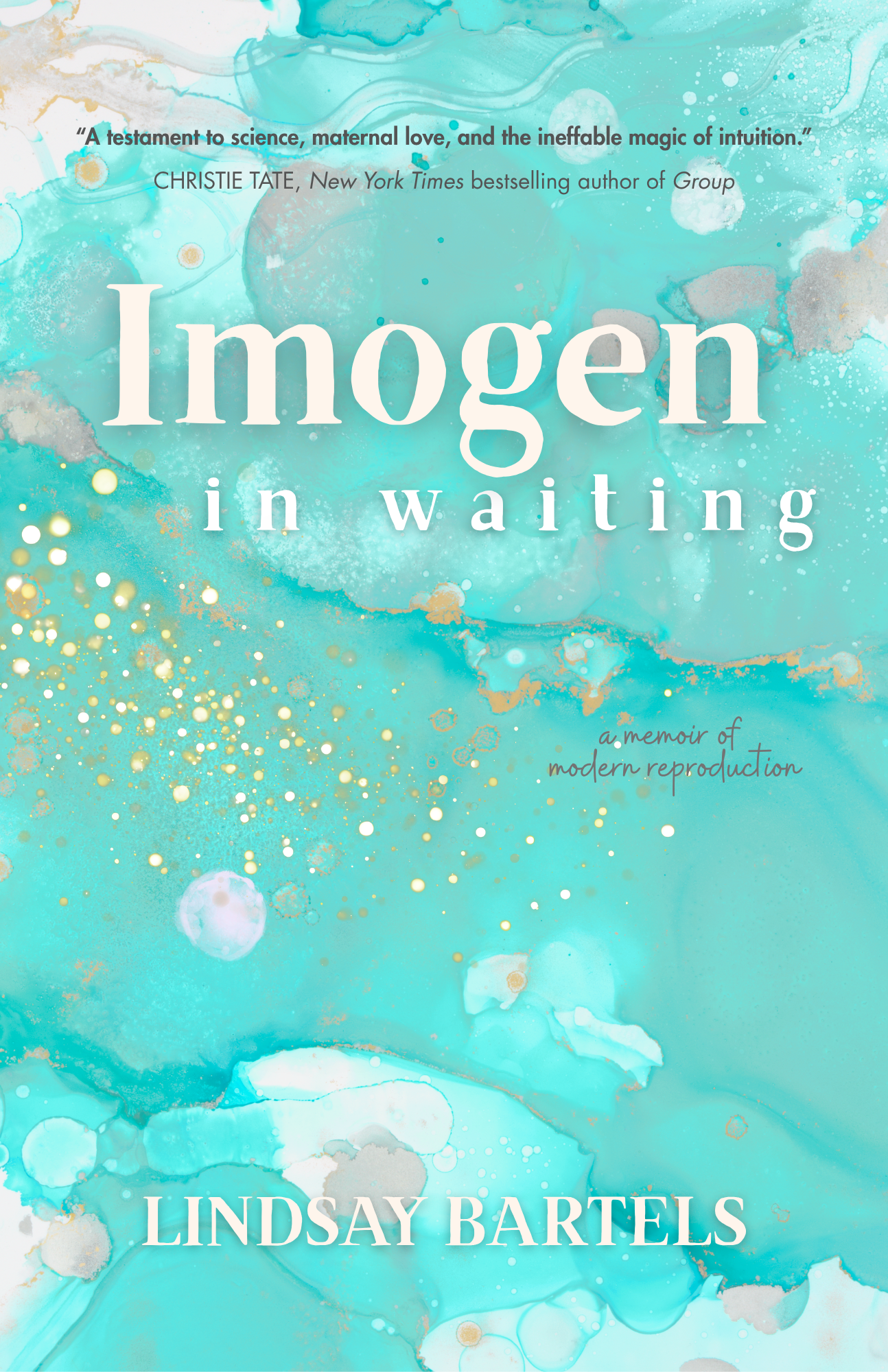
The biggest struggle for me in writing my first book, the memoir Imogen in Waiting, came after the first draft, when the craft of redrafting began. To do that I felt I needed to expose my story of having this conversation with my frozen embryo—sharing my experience and decision as to whether or not I bring her into being—to eyes other than my own. This was a bridge I knew I needed to cross. One I wanted to cross. I just didn’t anticipate how it would feel after throwing myself into it (hint: challenging).
During the MFA-alternative, online writing program, The Book Incubator, I was advised to only seek feedback once I felt the story was solid for me, first. This was the perfect approach for me to get that messy first draft down. Once I edited my first draft so that, to me, it made the most sense, wasn’t boring, and had all the components that I felt necessary to tell the story I wanted to tell, I then sent if off to beta readers.
I was lucky to have thirteen unpaid, willing, beta readers. They included people I knew well who were avid readers and excited, too, for me and my story; several new friends who were good writers and made themselves available to lend a hand (or their eyes and mind in this case!); and a few writers who I’d met through The Book Incubator, therefore being potentially objective readers of my story.
I gave them at least four weeks to get back to me, with a cap at eight. And, during that time, while awaiting their feedback, I couldn’t do anything at all except for take care of my basic needs and the basic needs of my children.
This was my writer ego activated to the max! One I was sure I didn’t have (haha) because I didn’t mind telling people what my story was about. Broad strokes were easy. But this—the sharing of my art to its very first audience—was like placing my beating insides into their hands. My most unfiltered truths felt on display in a completely vulnerable and exposed state.
Eep! Horrible.
During that waiting time I couldn’t even pick up a light read, nor listen to a podcast, or veg out and watch a show after my kids were asleep. The only input my mind could receive, when desperate, was re-reading the words I had sent out, making sure they still felt good to me. I took long hot showers, often sitting cross-legged under the spray in a fugue state. I sat on the floor of my bathroom and dried my hair for minutes longer than needed, reveling in the comforting heat. I ate a lot of take-away food.
I was experiencing, in the words of Michael Rosen from We’re Going On A Bear Hunt, the adage ‘I couldn’t go over it, I couldn’t go under it, I had to go through it’.
And I didn’t know what I didn’t know.
What I know now is that I had to go through this step to strengthen my muscle of exposure. To harden my shell. But I’m going to stop myself right there, actually, because I don’t like that analogy. I don’t want to have an impenetrable shield; I still want to feel things (and I do!). But this was a necessary step in reaching a wider readership to strengthen my resolve in receiving words from others that responded to mine on the page, so that they didn’t derail me from moving forward.
Thankfully, it only took a week or two for the bulk of readers to get back to me. And, as feedback came in, there was a lot of positivity. In fact, an abundance of positivity through which I grew wings. Wings that allowed me to float high above some of the thornier things—like the parts readers thought were boring, unpolished or unnecessary (unlike me, who thought they were necessary and interesting) or where readers wanted MORE information on people in the story, including myself, that I wasn’t yet willing to share or knew how to share in a way that felt appropriate. Mostly, I flagged these areas of contention, considered them and culled the pages lightly.
Carrying these considerations did, at times, make me want to question my resolve. Almost like the hill to publication felt steeper to climb when a reader’s response to my work wasn’t what was intended or didn’t land as anticipated. But it was through this experience that I acquired the fortitude to keep my expectations in check and, over time, access the other side of that hill to receive an offer for publication (and often this resilience appeared after a good night’s sleep)!
Another saying that helped fuel me during this time was the African proverb: ’if you want to go fast, go alone. If you want to go far, go together’.
Later on, when I’d have the incredible privilege of working with a professional editor, any unnecessary ‘darlings’ would be cut and necessary specifics added more freely. We could form a partnership and agreement on the arc of my story and character. But I do think it was taking on, and inviting in, these early bruises that made me more receptive to this stage of the process. That, frankly, got me there.
In the end, early feedback after my first draft, was a necessary pressure cooker on my path to being traditionally published. It loosened my ego and allowed a kind of magic to appear on the page that would bring my story to life in ways I couldn’t access via my own inner editor. Feedback taught me, too, how to fine-tune my ear so that, in the end, I could retain access to the beating pulse of a story only I could tell.
A native Texan turned Coloradan then Californian—and now Sydney-sider, Lindsay Bartels always pursues bringing the personal into her art. She has a BFA in Filmmaking, graduating with honors for her autobiographical documentary, and an MFA in Interior Architecture, focusing on sustainable design practices. When her newborn was a year old, she created a workbook for new parents, Your Baby Manual. Lindsay lives on the Northern Beaches with her husband, their children and two dogs; delighted to be among such an inclusive writing community. Imogen in Waiting: A Memoir of Modern Reproduction is her debut book.



Leave a Reply