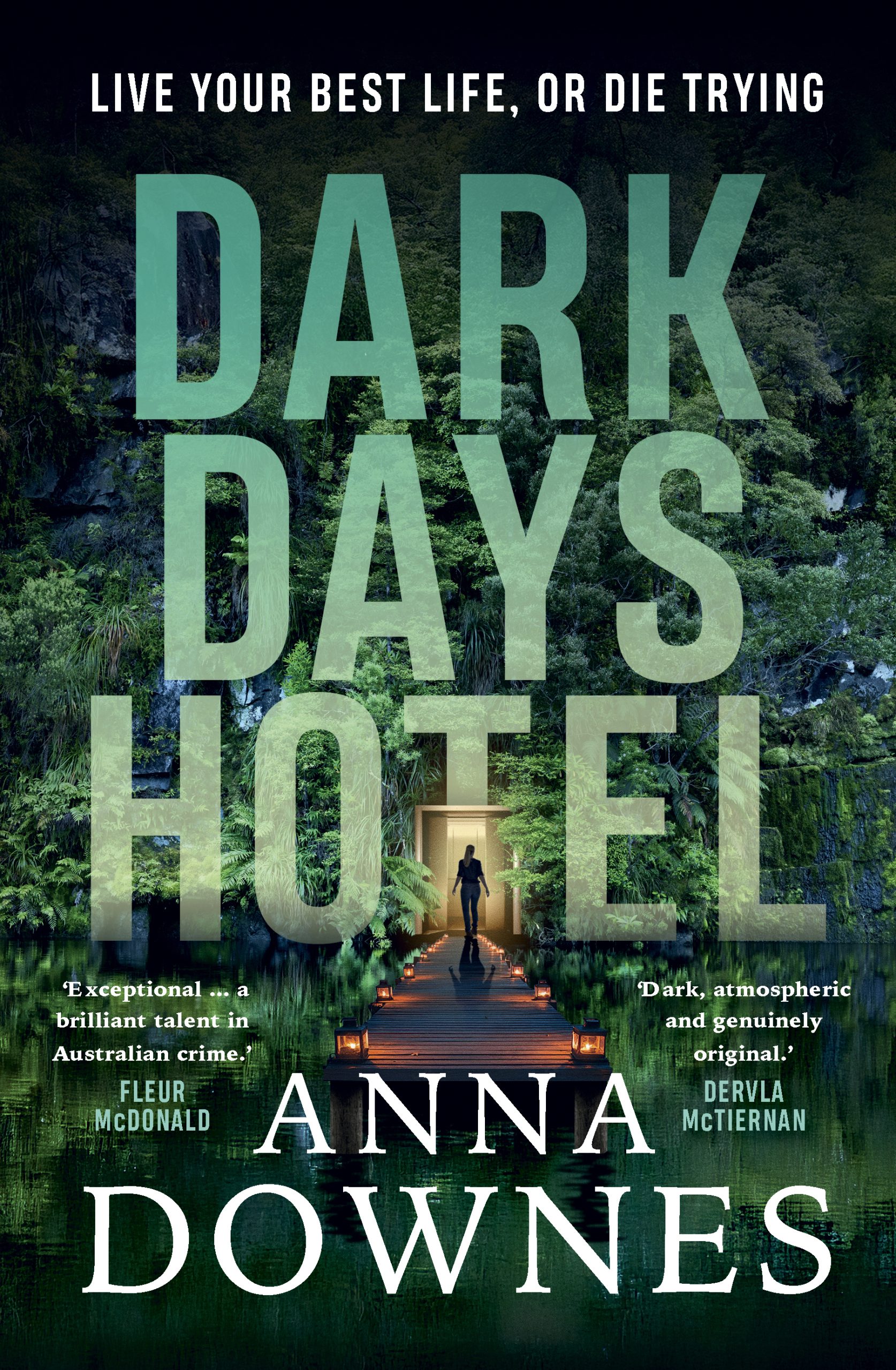
A few years ago, I had a wonderful idea for a novel: a crime is committed in a remote luxury hotel on Tasmania’s west coast, catering to the world’s most powerful people, and where biotechnology and longevity science had become the ultimate luxury commodities. I could imagine the setting – the architectural design, the treatments and the extraordinary wealth of the guests. I knew the questions I wanted to explore: what happens when we treat the human body as something to be perfected, optimised and monetised? What are we prepared to sacrifice in the pursuit of living longer, healthier lives?
I felt that irresistible buzz of potential. There was just one problem.
I can dream up the most fascinating setting or premise imaginable, but unless I find the characters who bring it to life, I don’t yet have a novel. I have a situation. And a situation, I’ve learned, is not necessarily a story.
I’m drawn to big ideas, particularly those that let me explore contemporary anxieties through suspense. But ideas are slippery: their possibilities are limitless, and it’s easy to pursue interesting tangents without getting closer to a workable narrative. I’ve also experienced the particular misery of reaching the middle of a first draft with characters wandering around feeling their feelings while the story meanders towards an increasingly elusive destination.
I call such meandering the Deep Dark Woods. And while I accept that it might sometimes be a fundamental part of the process, it’s not somewhere I care to revisit.
With Dark Days Hotel, I decided to do more structural thinking before I began writing. My aim wasn’t to plot every scene or anticipate every twist, but to work out how the characters themselves might generate the story’s momentum. I began by asking what each central character wanted – not just in an abstract, thematic sense, but in practical, material terms. What are they trying to achieve? What would make their life better? What problem are they hoping to solve? Then I started digging into their psychology: what do they need? What do they believe about themselves and the world that might be holding them back? What are they afraid of? What might they have to confront, relinquish or learn before they can move forward?
For me, these dimensions are inseparable. A character’s external goal gives them something to do; their internal conflict gives those actions meaning. Ideally, the plot puts pressure on both at once.
In Dark Days Hotel, the setting itself offered a useful starting point. The hotel’s promise of health, longevity and other physical transformation would mean different things to different people, depending on what they hoped to gain from it and what they were prepared to risk. Its employees, guests and the people who run it might occupy the same physical space, but they would experience that world very differently. I wanted each character’s relationship with the hotel to be personal and specific. Why were they there? What might they lose? And how could their individual desires and vulnerabilities bring them into conflict with one another?
While grappling with these questions, I discovered The Nutshell Technique, a screenwriting methodology developed by Jill Chamberlain. Although designed for screenwriters, I’ve found its principles extremely useful for fiction.
At its heart is a deceptively simple premise: character is plot, and plot is character. The events of a story shouldn’t simply happen to a person; they should test something specific about them. A protagonist has a unique flaw or mistaken belief, and the narrative is the obstacle course that forces them to confront and transform it.
Chamberlain’s framework breaks this journey into key turning points. First comes the Set-Up Want: the concrete, situational thing the protagonist believes will make them happy or solve their problem. This isn’t necessarily what they need most deeply, but it’s what they’re actively pursuing.
Next is the Point of No Return, which propels them into the main body of the story. It delivers what they wanted, but with an unwelcome complication: the Catch.
The Catch is the perfect test of the protagonist’s flaw. It creates obstacles that expose the limits of their worldview and push them towards the Crisis, their lowest point. The crisis should be the opposite of the Set-Up Want: the thing they were trying to achieve has led them to its antithesis.
To escape, the protagonist must make a Climactic Choice, taking a first step away from their flaw and towards a new way of being. In the Final Step, one last emblematic action demonstrates how they’ve changed.
This schematic speaks to classic Aristotelian definitions of drama. In a tragedy, the protagonist fails to overcome their flaw, and their circumstances deteriorate accordingly. In a comedy, in the broader dramatic sense of a story with a positive resolution, they move towards their strength and their fortunes improve.
Of course, it’s a framework, not a formula, and I don’t believe every novel needs to conform to it rigidly. But I love the way it connects external events to internal transformation, and asks not only: what happens? But: who does it happen to, why does it have to happen to them, and how might it change them?
Mapping each central character’s emotional arc in this way helped me think through the relationship between their conscious desires, deeper needs and the events that might expose the gap between them. It also gave me a way to test my ideas: if a character wanted something, what would happen if they got it? What would be the Catch? How might it expose their flaw? What if they failed to change?
These things matter because an extraordinary setting, startling revelation or high-stakes predicament might make a compelling scene – but if it doesn’t put pressure on the protagonist’s particular vulnerabilities or force them to make consequential choices, it risks becoming unnecessary decoration. And a story is most satisfying when all the puzzle pieces work together: desire generates a decision, that decision creates consequences, and those consequences force a character to choose between who they’ve always been and who they might become.
Once I had a workable framework, I began writing. But here’s the thing about outlining: it doesn’t mean you know everything that’s going to happen – and neither should it.
For me, the framework provided enough structure to begin without requiring me to anticipate every detail – and as I wrote the first draft, new possibilities emerged. This always happens, no matter how hard I try to prevent it. Some details prove more interesting than I expect; others just don’t work on the page. My brain sometimes throws me curve balls, and I find myself reconsidering the entire story. So, rather than treating the outline as a set of instructions, I used it as a reference point. When something changed, I could look at the larger structure and ask whether the change strengthened the narrative or sent it in a less productive direction.
And this, for me, is the real value of plotting. It isn’t about eliminating uncertainty or controlling every aspect of the creative process. It’s about establishing enough of a framework that you can recognise when something isn’t working, and make informed decisions about how to fix it.
I still need to spend time in woods, wandering among the trees, following my instinct and discovering what happens when one character meets another. But I also need to be able to climb three thousand feet into the air and see the forest as a whole. Learning to move between those two perspectives has been one of the most useful things I’ve done for my writing.
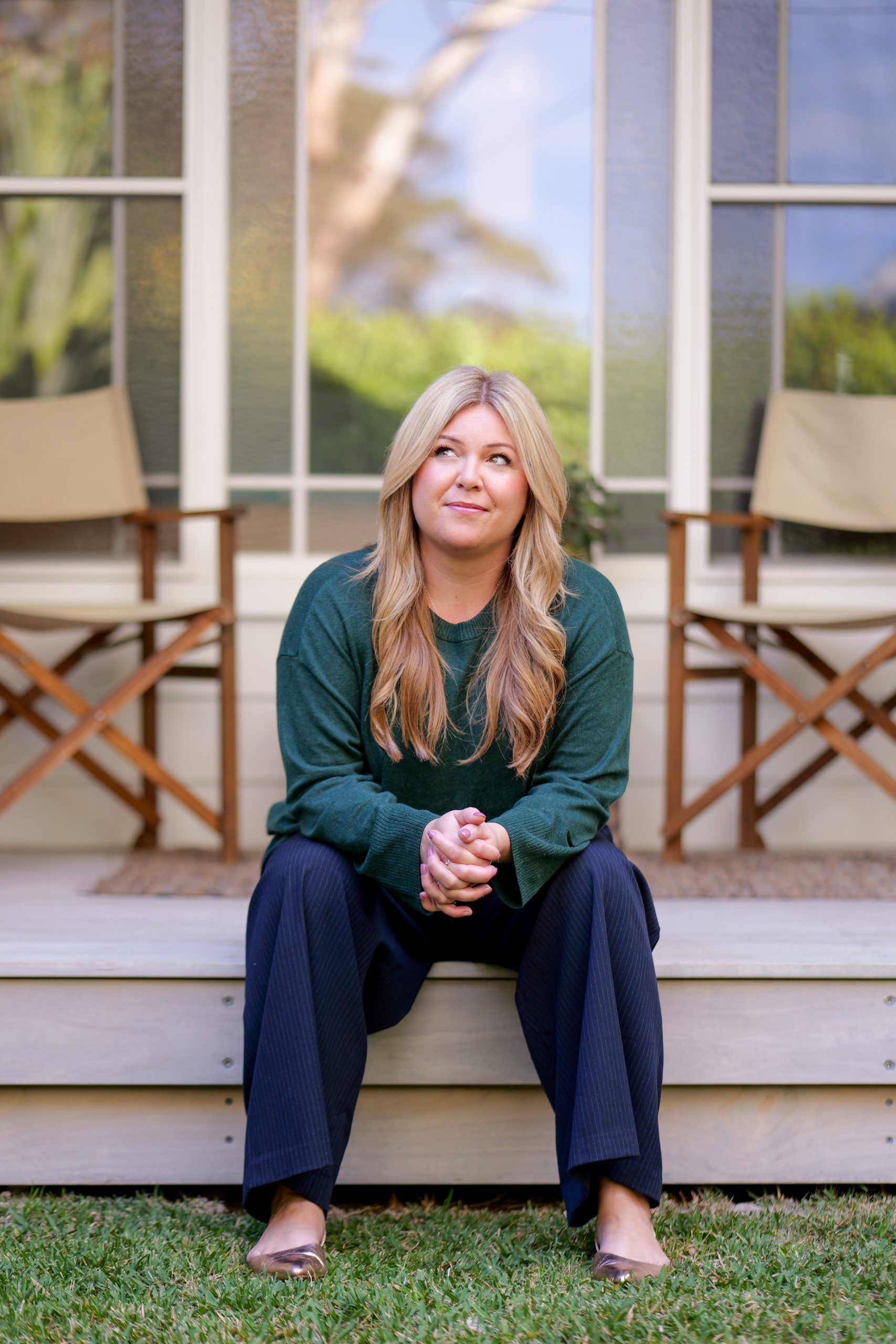
Anna Downes is the internationally bestselling author of The Safe Place, The Shadow House, Red River Road (shortlisted for the 2025 ABIA General Fiction Book of the Year), and Dark Days Hotel. Born and raised in Sheffield, UK, she studied Drama at the University of Manchester and acting at Royal Academy of Dramatic Art before working professionally until 2011, when she moved to Australia and turned her hand to writing. Her novels have been optioned for film and TV, and translated into over ten languages. She now lives on the NSW Central Coast with her husband and two children.



Leave a Reply