Before I wrote my first novel, The Star on the Grave, I was an advertising copywriter by profession. But I had always wanted to write something significant. A movie.
In 2008 I decided the time had come to record my father, a Holocaust survivor, and learn about his life. This recording became the basis for a screenplay, which later, inadvertently, segued to a book about how my 10-year-old father and his family were rescued from death by a Japanese diplomat, named Chiune Sugihara, who secured transit visas for them to escape Lithuania after fleeing Poland in 1939. Apparently, this hero had saved not only my family, but 6,000 others from the Holocaust.
I became obsessed with an urge to perpetuate Sugihara’s memory. I read every ‘How to write a screenplay’ book I could find and attended various screenwriting workshops to write first draft of a movie. I felt right at home in this genre. I could see the scenes and describe them. I was great at realistic dialogue – I had been told that throughout my copywriting career. So that part came easy.
I also gathered a team of three passionate collaborators. We met twice a week to go over plot ideas, themes, characters. One of the collaborators was a very experienced screenwriter and so we were guided by him. He created a huge chart of various themes and forced us to pick one and adhere to it, constantly referring back to it to ensure we were not going off at tangents. We had to develop a solid framework or structure and then fill in the blanks with detail. We identified the three acts. We developed the main characters with their quirks and other traits that would give each of them a unique voice and personality. We brainstormed to imagine their ’ordinary world’ and to determine the ‘inciting incident’, or catalyst, that would change that world and set them on their journey. What was the quest, the goal? And what were the key themes – the take-outs I wanted the audience to remember? There had to be conflict, of course, at every turn, to try to prevent our characters from reaching their goal. There had to be a clearly identifiable midpoint, a crisis, a ‘heart of darkness’ for the protagonist, where all hope seems lost. Then a will to go on, a climax and a swift resolution.
To recreate that incredible story more fully, I needed to do a lot of research. There were still some Sugihara survivors alive, many in the US. So I travelled to interview them. But I also took creative licence and embellished my family’s story for dramatic effect, reinventing the characters of my father and grandmother for the sake of effective storytelling. For instance, my father transformed from a meek and loving man to an emotionally disconnected individual, hardened by the untimely loss of his young wife and unresolved childhood trauma. My grandmother, who died peacefully at 93, became terminally ill in this story, to raise the stakes and force my young female protagonist, Rachel, modelled on me, to rise to the challenge of overcoming adversity, to take on the role of a true heroine.
After about a decade, I finally had a rough but decent first draft and I even secured grants from Screen Australia and Screen NSW.
But then Covid hit.
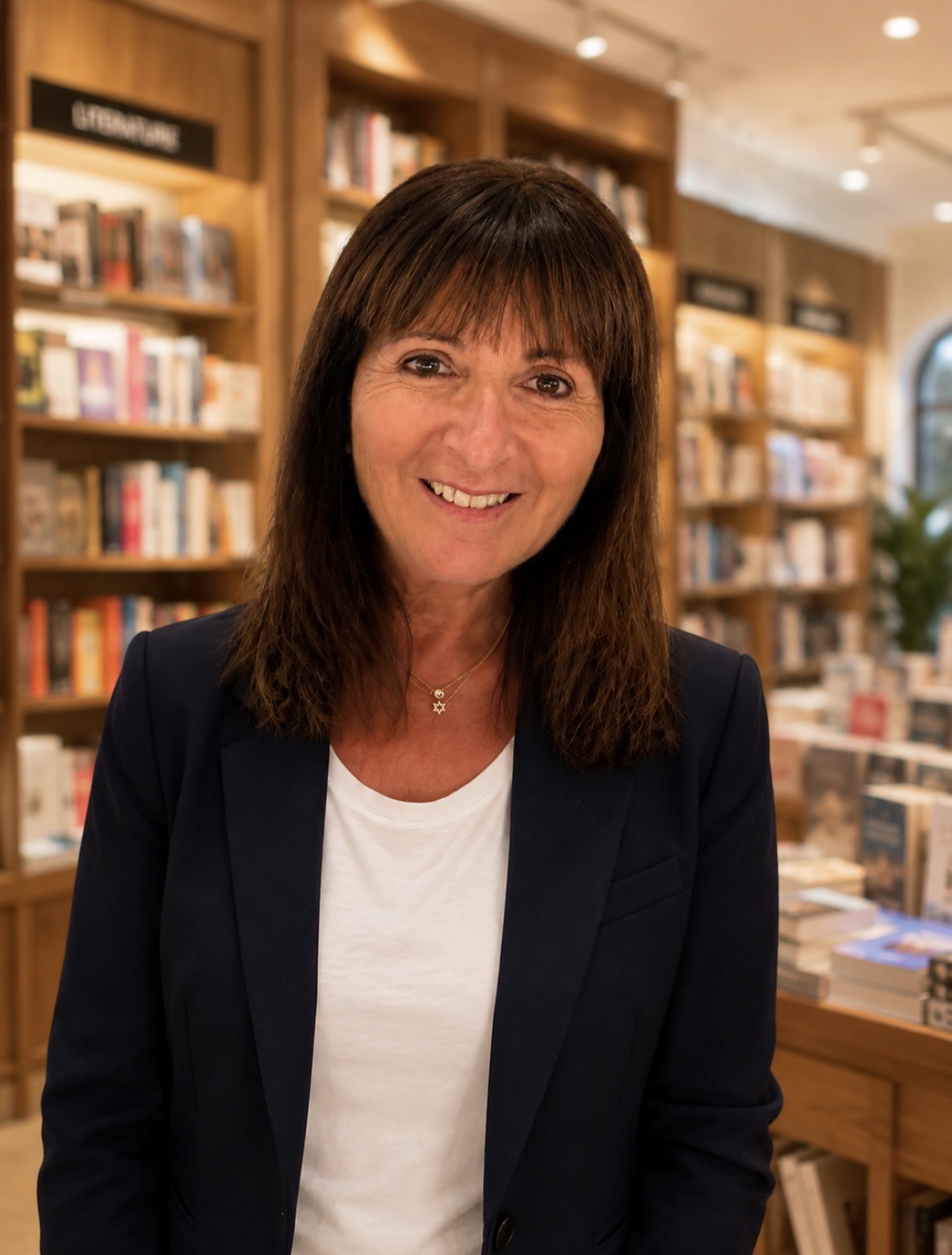
A dear friend, the ex-CEO of Screen Australia, told me at the time: ’Nobody is going to the movies for the foreseeable future. How about you write a book instead?’
’Sure!’ I said, having no idea how to do that. Couldn’t be too difficult, I thought.
Journey number two commenced. I was in lockdown, and I wrote and wrote until I produced what I believed was a 75,000-word novel manuscript. Someone then said: well, now you need a literary editor.
’A what?’ I said.
’Someone to edit your work, so that it is presentable enough to approach publishers.’
I found an editor, who announced, encouragingly: ’This is a great story, but it reads like a well-structured screenplay!’
Funny that.
She said I was too focused on showing not telling. I was relying on a camera and a director.
’More description, more prose!’ The editor ordered. I had to show and tell. I had to get inside the heads of my characters and describe their thoughts, which completely goes against the screenwriting edict of only describing what you can physically see!
I had to do much more redrafting to learn that in novel writing I must describe each scene in great detail – the sights, the smells, the sounds, how the atmosphere and the action make the character feel and perhaps evoke some memories. You do this so that readers can create their own mini movie in their heads based on these rich descriptions.
In a screenplay, for each scene you have a SCENE HEADING and then you provide a concise description. Your scene heading might be: INTERNAL HOSPITAL ROOM – ST VINCENT’S HOSPITAL, SYDNEY – LATE MORNING. Then you describe the action: ‘A young woman, Rachel, possibly 20, dressed in a blue and white striped nurse’s uniform; auburn, shoulder length hair twisted into a bun partially concealed by a white cap. She approaches an elderly woman, Hannah, who sits on her bed facing the window, pale, withered, swamped by an oversized gown.’
In the novel, however, I had to rewrite the scene from Rachel’s point of view, describing the surroundings and the old woman’s appearance through her eyes, so as to paint a picture; the picture that in a film a cameraman captures for an audience. I had to also describe Rachel’s emotional responses to what was happening, filtered through her personal experience as both a nurse and an artist. Only then could the scene in the novel come alive – told in a way that only Rachel could see.
This is how I ended up rewriting that screenplay scene in my novel:
Rachel approaches her. Bathed in the golden glow, almost angelic, Hannah’s face looks like porcelain. Her skin is fine and translucent, her veins duck-egg blue. Rachel thinks it’s paper-thin, thinks she could see the blood surging through Hannah’s veins if she leant in. The perfect light for painting her portrait – but even as Rachel wishes she had her paints at hand, her medical training kicks in. She commits the scene to memory. Hannah is only wearing a thin hospital gown over a light, long-sleeved blouse. Or rather, the gown is wearing her: it envelops her withered form. The old and frail are perpetually cold, Rachel knows.
It took me six more months and a LOT more rewriting to embellish some scenes while also let go of scenes that didn’t move the story forward,. After that I had to reorganise chapters to fill some gaps and to weave in new additions seamlessly until my editor decided my manuscript resembled a book. It was at that stage that I began sending it out to publishers.
And I waited. And waited. Waited for many months, curled up in foetal position, crying on my bed as rejection after rejection poured in. I remember lamenting to my tortured husband: ’What was I thinking? Did I really believe I could write a book?’
And then, one day, one publisher finally had faith in me.
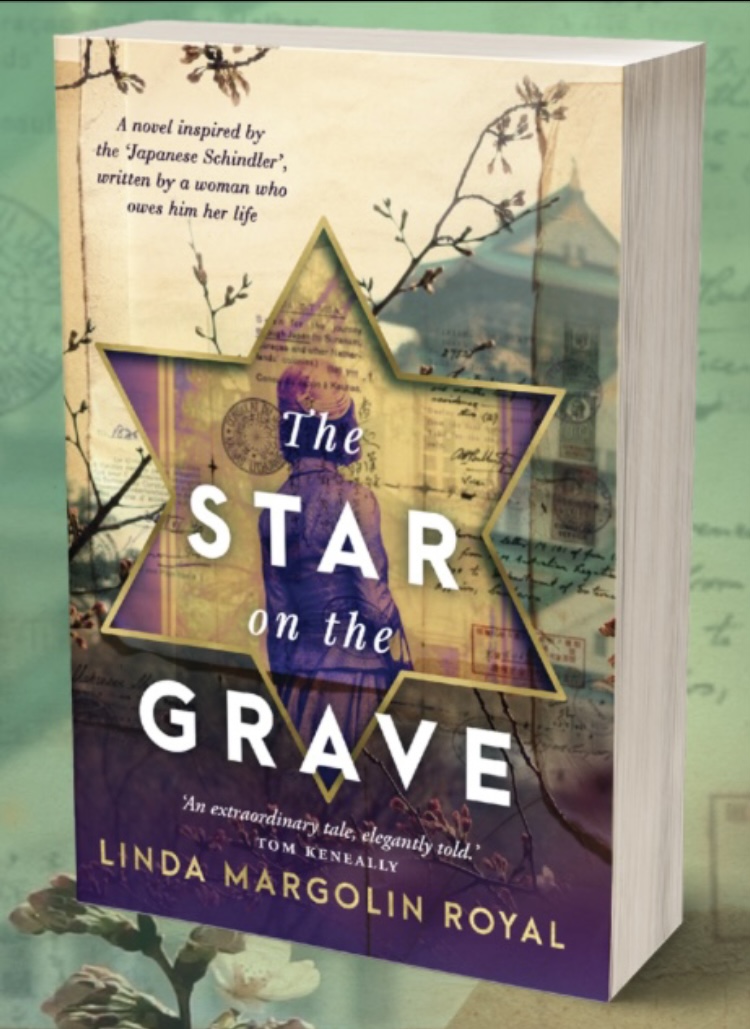
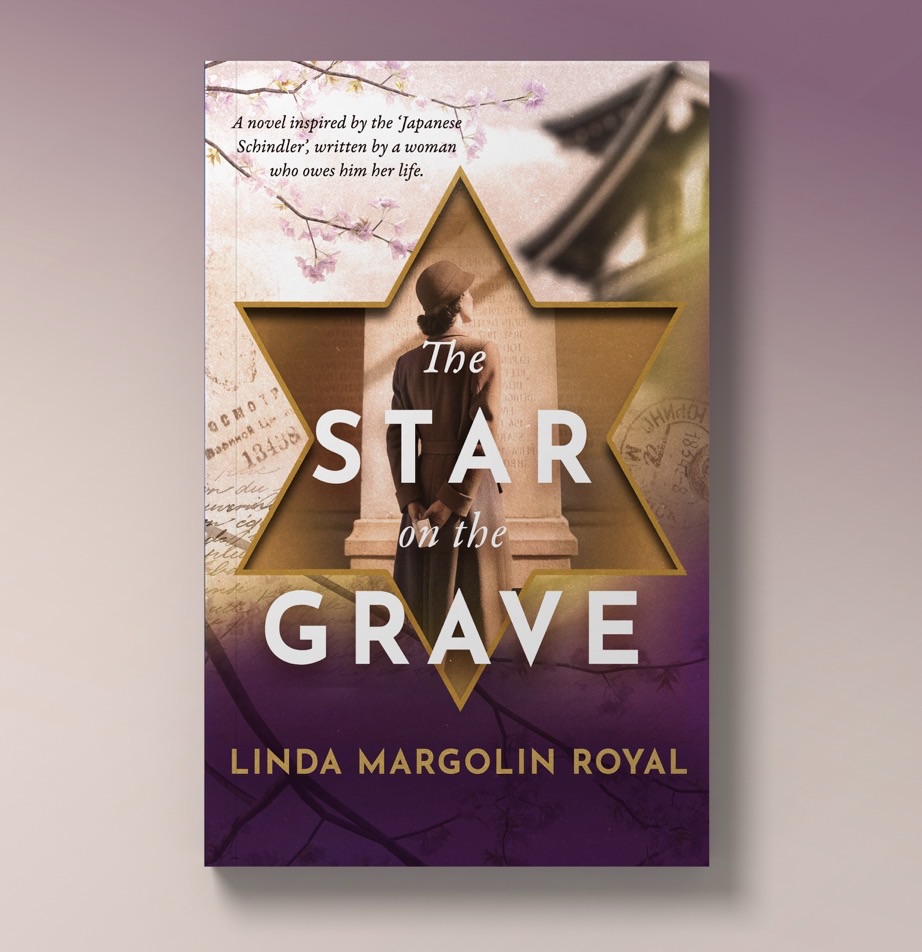
Once the book was out, to my great surprise, readers quickly embraced this story of a Japanese Schindler. The novel became a bestseller and I decided to try and attract American interest too, particularly that the major film studios and streaming services are located there. I hoped I could finally come full circle and develop the book into a movie or a TV series. A much easier process this time – the script already well formed. With some exposure via the novel, I could have a greater chance at cinematic success. But first I needed a US publisher. No mean feat.
Two years and many more rejections later, I’m still waiting for the movie deal! I have, however, had my book published on American soil this year, with Sibylline Press.
Through this unintended but very valuable journey from screenwriting to novel writing and back again, I have learned that story is story, but the process of bringing it alive varies greatly from discipline to discipline. It was wonderful to learn a new way of tackling the same subject matter. I was able to apply the content I had honed for the screenplay to the novel outline, and then when I had done embellishing the book manuscript, I could then revisit the screenplay and add some detail which made it far richer.
Linda Margolin Royal worked as a copywriter for 30 years in Australia and the US for major multinationals. She is forever thankful her family received life-saving transit visas from Chiune Sugihara, which enabled them to escape the Holocaust and find a home in Australia. Hundreds of others were murdered. Her debut novel, The Star on the Grave, is therefore a labour of love.



Well done. Sounds like you’re on your way to a great screenplay.
And how about you, dear Margaret? Are you still working on your book?
Always great to hear the full backstory!
Thank you, Randi, and Linda’s is a fascinating one!